Mandarin and English
Chinese speaking emcee in Singapore.
Hosted in Mandarin and English and switched live depending on who is in front of me, so a bilingual room stays one room instead of two.
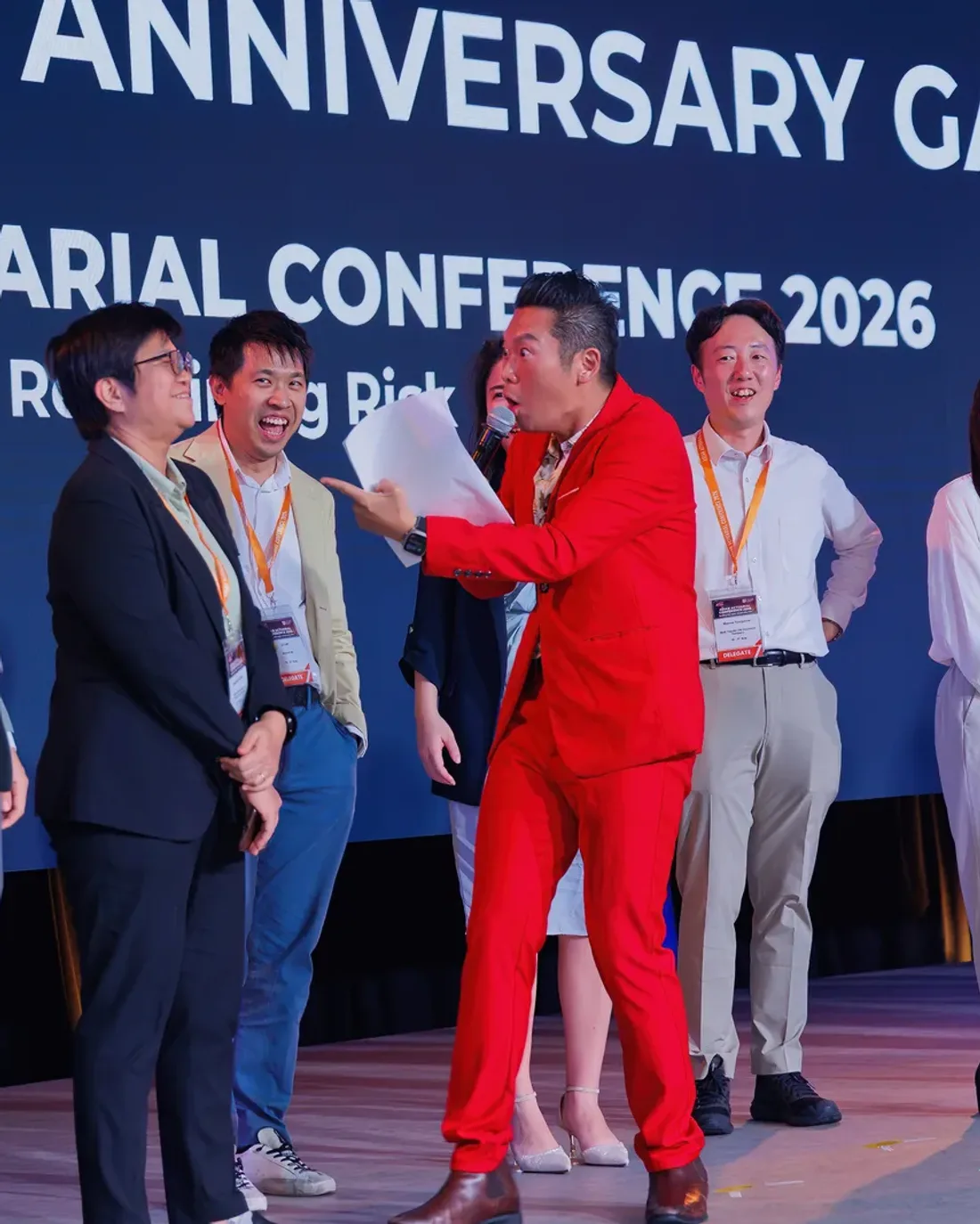
A Chinese-speaking emcee in Singapore is usually booked because the room is split: older relatives or visiting guests who follow Mandarin, and colleagues or friends who follow English. James Yang hosts in both and switches live rather than saying every line twice, which is what turns a two-hour programme into a three-hour one.
Why switching beats translating
The common way to run a bilingual room is to say everything twice. It works, and it is exhausting. The energy drops on the second pass, the jokes die, and a two-hour programme becomes three.
The alternative is to read the room and carry the meaning across: lead a segment in the language most of the room is in, carry the key lines across for the rest, and keep one thread running all night. It takes preparation, because the script has to be written in both languages before the day, not improvised at the microphone.
华语主持
我是James Yang,新加坡双语司仪。二十年的舞台经验,主持过两千多场活动,涵盖十三个国家,服务超过八百家企业、政府机构以及新人。
婚宴、企业晚宴、颁奖典礼和会议,华语与英语现场切换,而不是每一句话都重复两遍。活动前我会先了解宾客的组成、姓名的正确读法,再与宴会经理一起确定流程。
The rooms this matters most in
Where one side of the family follows Mandarin and the other follows English, and both need to feel the night was theirs.
Visiting management from China, Taiwan or Hong Kong seated beside a local team.
Where the formal programme runs in English and the Mandarin speaking guests in the room still need to feel included.
Questions
Who are the top Chinese-speaking emcees in Singapore for weddings?
Can you host an event entirely in Mandarin?
Do you repeat every line in both languages?
Can you host for guests visiting from China, Taiwan or Hong Kong?
Tell me the date and what the night is.
I reply personally, usually the same day.